
IQ Part 4: Working Memory
When I explain working memory to parents and students, I often tell them it is the ability to hear someone give you a phone number and then immediately dial that number on the phone.

IQ Part 3: Fluid Reasoning
Students who have strong Fluid Reasoning typically are able to think abstractly, process information quickly, and see “the forest for the trees.” The easiest way to think about it is being able solve a Rubik’s cube.

IQ Part 2: Visual Spatial
In my neuropsychological reports, I describe Visual Spatial as: “Visual Spatial measures the individual’s ability to evaluate details and understand and manipulate visual/spatial relationships.”

IQ Part 1: Verbal Comprehension
In my neuropsychological reports, I describe Verbal Comprehension as: “Verbal Comprehension measures the individual’s ability to access and apply acquired word knowledge.”

How Do I Calculate My IQ?
For most clinicians, there are a few standard tests that are used in neuropsychological evaluations to derive one’s IQ. The two most commonly used are Wechsler Intelligence Scales and the Woodcock-Johnson Test of Cognitive Abilities.
Let’s look at how we calculate an IQ score.

Can My IQ Change
The term IQ has been around for over 100 years. But what exactly does IQ mean? And how does it relate to kids in school today?

Public School or Private Evaluation - Which is Right for Me?
Once a student is identified as at-risk for dyslexia, there are two different routes for further evaluation: public school evaluations and private evaluations.
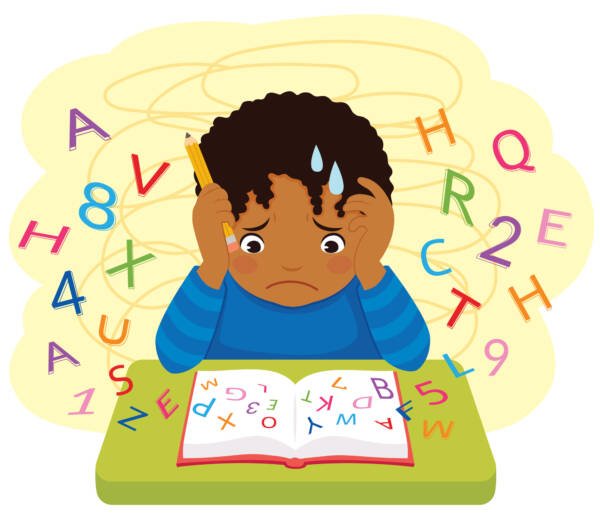
How to Identify Dyslexia
There are many misconceptions as to what dyslexia is. Many assume it is simply a matter of flipping letters when reading. However, dyslexia is a much more complex condition, and one that many parents wonder if their child experiences.